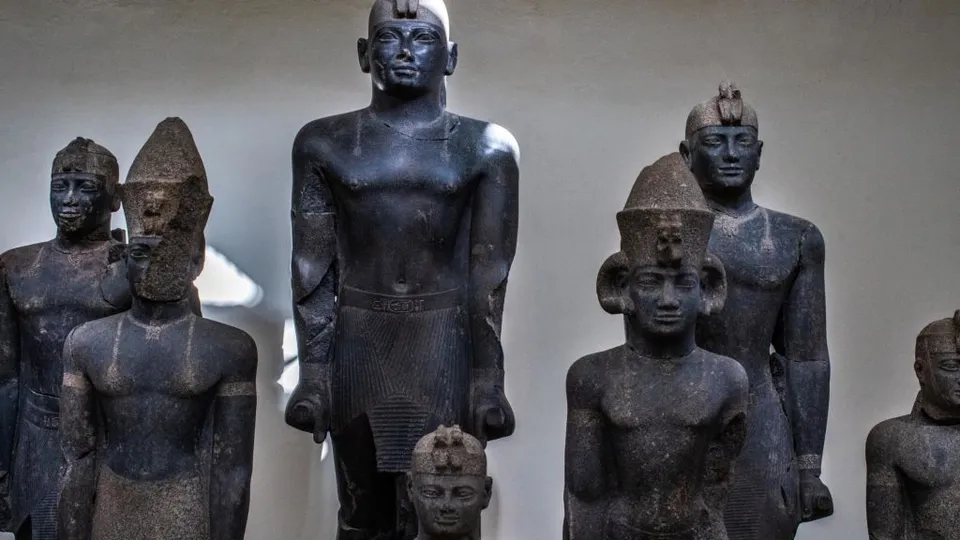
When you think of Pharaohs, you probably picture Arab men dressed in regal headgear and garments. However, for nearly a century (circa 747 to 656 BC) the Pharaohs who ruled Egypt were Black, rulers from the nearby Kingdom of Kush in present-day Sudan.
Long before Rome or Athens, the Ethiopian highlands were home to an agricultural revolution that outpaced the rest of the world—and a mysterious trading empire that vanished without a trace.
Traditionally, Africans do not choose names just because they are popular or sound cool. Instead, they use names as tools for storytelling by narrating the circumstances around one’s birth, and connecting the individual with their family and destiny.
From scarification to ochre paste, gold lip plates to elaborate hairstyles—explore the stunning diversity of pre-colonial African beauty rituals across five regions.
The stone structure represents more than just history; it serves as proof of the sophistication of African civilisation, contrary to how the continent was portrayed by colonialists.
How did a continent where dark skin once signified royalty become the world's largest market for skin bleaching? Tracing the colonial roots of Africa's beauty crisis.
Often called “The Pearl of Africa,” Uganda is a country that quietly astonishes. It may not always top glossy travel lists, but those who visit quickly discover a destination overflowing
In the heart of southern Mali, the Bamana (or Bambara) people once practised rituals that went far beyond simple ceremony. These were transformative acts, communal moments of profound significance that bound individuals to their communities and connected the living to the supernatural.
Summary
As the title suggests, The History of Bunyoro Kitara narrates the story of Bunyoro Kitara from the rule of the gods through to independence—both for the kingdom and